



Introduction
The “movement snack” was born out of two very real clinical challenge that faces all of us working with people in pain!
Firstly, how do we work with high levels of pain and active movement?
This can be a highly challenging situation and clinicians often defer to more passive interventions because they don’t have a system for managing this process.
Secondly, how do we help people self-manage their painful problems better?
We have all been asked by patients, “what can I do to help the problem?” (1)Subialka JA, Smith K, Signorino JA, Young JL, Rhon DI, Rentmeester C. What do patients referred to physical therapy for a musculoskeletal condition expect? A qualitative assessment. Musculoskelet Sci Pract. 2022;59:102543.
doi: 10.1016/j.msksp.2022.102543 · PMID: 35334352, and we also know that people who take a more active role in their recovery tend to get better outcomes (2)Chen Y, Campbell P, Strauss VY, Foster NE, Jordan KP, Dunn KM. Trajectories and predictors of the long-term course of low back pain: cohort study with 5-year follow-up. Pain. 2018;159(2):252-260.
doi: 10.1097/j.pain.0000000000001097 · PMID: 29112007, and a “movement snack” allows someone the opportunity to take an active role within their own recovery! This approach fits within a modern biopsychosocial and person focused approach to care (3)Cormack B, Stilwell P, Coninx S, Gibson J. The biopsychosocial model is lost in translation: from misrepresentation to an enactive modernization. Physiother Theory Pract. 2023;39(11):2273-2288.
doi: 10.1080/09593985.2022.2080130 · PMID: 35645164
What is a movement snack?
So, what is a “movement snack”? In its purest form, it’s just a little bit of movement, a snack of movement if you like. This performs several roles, especially during early-stage rehab when pain is often at its peak.
A movement snack involves:
- Small dose of movement
- Low level of effort (especially relative to higher pain levels)
- Moving the affected area (e.g. lower back)
- Relaxing (to allow movement to occur)
Agency/control
An underdiscussed area of rehabilitation is having agency or control over the current situation. t has previously been shown that level of control over the problem is a prognostic factor in recovery from back pain. (4)Foster NE, Thomas E, Bishop A, Dunn KM, Main CJ. Distinctiveness of psychological obstacles to recovery in low back pain patients in primary care. Pain. 2010;148(3):398-406.
doi: 10.1016/j.pain.2009.11.002 · PMID: 20022697. It could be argued that the McKenzie extension exercise may derive some of its effects on pain through providing an opportunity to exert some level of control over the painful problem.
Pain self-efficacy
Pain self-efficacy is another strong prognostic factor for musculoskeletal pain (5)Martinez-Calderon J, Zamora-Campos C, Navarro-Ledesma S, Luque-Suarez A. The role of self-efficacy on the prognosis of chronic musculoskeletal pain: a systematic review. J Pain. 2018;19(1):10-34.
doi: 10.1016/j.jpain.2017.08.008 · PMID: 28939015. It may be doing an exercise even with some pain or discomfort that can change people’s perceptions around what is occurring when they experience pain with movement, this perceptual change can lead to improved outcomes for pain and disability.
Minimising risk of flares
By using a smaller dosage (A snack), it minimises the risk of provoking a negative response in terms of pain that could discourage further movement. Pain can be both scary and uncomfortable and this is likely to affect someone’s overall movement behaviours. Striking a balance between tolerable levels of pain and excessively provoking the problem is key.
Maximising adherence/self-management
A low effort, low time cost exercise that can be performed anywhere with no equipment means the barriers to achieving it reduces (6)Jack K, McLean SM, Moffett JK, Gardiner E. Barriers to treatment adherence in physiotherapy outpatient clinics: a systematic review. Man Ther. 2010;15(3):220-8.
doi: 10.1016/j.math.2009.12.004 · PMID: 20163979. With often low rates of rehabilitation exercise adherence, its vital to design rehab interventions that minimise the frictions associated with low levels of adherence, and ultimately this leads to a greater ability to self-manage!
Reasoning
The clinical reasoning process forms a critical component in the application of movement snacks. By using the key criteria listed below, we can apply movement therapeutically in a person focused way that considers their current state, rather than a ‘blanket approach’ to treatment that doesn’t occur with a more prescriptive approach that ignores baseline patient characteristics.
Rule of 10
The “rule of 10” is a simple clinical heuristic that I started using around 10 years ago that allows clinicians to attempt to control movement/exercise dosage to minimise increases in pain, especially when people are at their most sensitive and more likely to “flare up”.
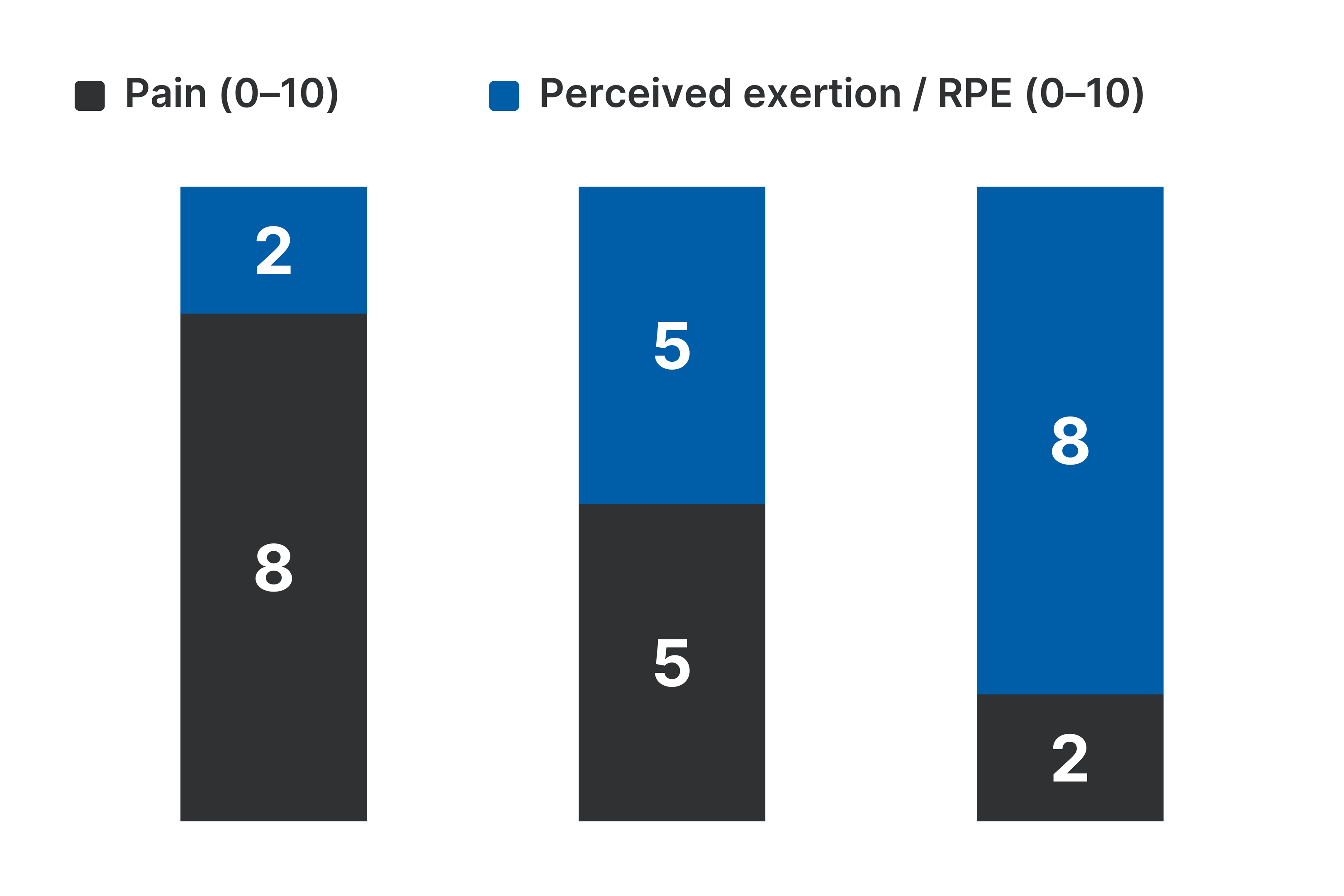
It uses two subjective measures, pain intensity on a 11-point (0-10) visual analogue scale and an 11-point (0-10) rating of perceived exertion scale, which in essence is a subjective measure of exercise intensity. As pain intensity rises, exercise intensity reduces to reduce the level of stimulus to the painful area to attempt to minimise subsequent painful responses. This is an inexact science as when pain intensity increases, analgesic responses to exercise often can become inconsistent in the presence of pain (7)Vaegter HB, Jones MD. Exercise-induced hypoalgesia after acute and regular exercise: experimental and clinical manifestations and possible mechanisms in individuals with and without pain. Pain Rep. 2020;5(5):e823.
doi: 10.1097/PR9.0000000000000823 · PMID: 33062901.
In its most simple conceptualisation, pain, is a stimulus and response system. Nociceptors sense noxious stimulus via thermal, chemical, or mechanical channels and respond via generating an action potential. Exercise is a mechanical stimulus that can provoke often pain when pain is already present, and managing the level of mechanical stimulus is less likely to provoke an increase in symptoms.
Practical example
A patient comes in with 8/10 back pain on the VAS. The RPE of any exercise selected would be around 2/3.
A patient’s pain has settled to around 2 or 3 on the VAS, RPE could go as high as 8 with exercises.
Baseline pain matters
“Pain flares in response to physical activity in individuals with LBP seem to be linked with baseline pain sensitivity and pain intensity, and impair the beneficial exercise-induced hypoalgesia” – Vaetger 2021(8)Vaegter HB, Petersen KK, Sjodsholm LV, Schou P, Andersen MB, Graven-Nielsen T. Impaired exercise-induced hypoalgesia in individuals reporting an increase in low back pain during acute exercise. Eur J Pain. 2021;25(5):1053-1063.
doi: 10.1002/ejp.1726 · PMID: 33400333
It would appear that the higher the baseline level of pain, the more exaggerated and inconsistent responses to an exercise stimulus seem to be. This knowledge is important as it prepares clinicians to move away from homogonous responses from the application of therapeutic exercise and use this knowledge to apply an exercise stimulus in a more person focused way. Finding out more about current pain and responses to stimulus, such as irritability, through detailed assessment allows this process to occur.
Dosage rather than type
At a population level, many types of exercise seem to be potentially beneficial for painful problems (9)Hayden JA, Ellis J, Ogilvie R, Malmivaara A, van Tulder MW. Exercise therapy for chronic low back pain. Cochrane Database Syst Rev. 2021;9(9):CD009790.
doi: 10.1002/14651858.CD009790.pub2 · PMID: 34580864. However, when studies also report individual data regarding outcomes, we see much more varied responses to standardised exercise programs especially when baseline pain is increased, most studies apply the same program regardless of the baseline status of the individual.
In my opinion, it could be argued exercise types such as Pilates and motor control exercises don’t conform to their proposed specific mechanisms but provide a low-level stimulus that is more palatable to a painful system, and hence why they can have a positive effect and this perspective informs the use of movement snacks.
Screening
To be able to create a more personalised exercise intervention, the assessment process becomes exceptionally important. This can be more subjectively based through listening and asking specific questions or more objectively based through performing specific movements or exercises and then gauging the painful response.
It must be highlighted however that this is not a precision process of laser guided rehab! Instead, an iterative process that evolves over time in line with the current state of the patient and their painful problem.
Subjective
The Subjective assessment is a key part of trying to identify the suitable exercise dosage. The best subjective assessments are built on active listening, empathy and a person focus that creates a safe space for people to express their painful experience (10)Elwyn G, Buetow S, Hibbard J, Wensing M. Measuring quality through performance. Respecting the subjective: quality measurement from the patient's perspective. BMJ. 2007;335(7628):1021-2.
doi: 10.1136/bmj.39339.490301.AD · PMID: 18007003. Giving space to allow people to expand on their experiences is likely to generate information that can be used help them whilst increasing intrinsic reassurance (11)Hasenbring MI, Pincus T. Effective reassurance in primary care of low back pain: what messages from clinicians are most beneficial at early stages? Clin J Pain. 2015;31(2):133-6.
doi: 10.1097/AJP.0000000000000097 · PMID: 24662495 in the therapeutic process.
Visual analogue scale of pain intensity
It is important to remember the VAS is a highly subjective measure. Drilling further down into pain intensity is important and can require some key questions that give some context to a potentially arbitrary number.
“What is the level of the worst pain that you experience?”
This gives the peak of the pain at its worst but may not reflect the average pain experienced.
“What is the average level of pain?”
This gives a different indication of the level of pain and allows a different perspective to emerge.
“How long does that last for?”
Sometimes this can subside quite quickly or linger for a while. A high level of pain for only a moment might be more tolerable than a lower score over a longer time period.
“Is there a specific activity or movement that provokes the problem”.
This helps provide a more specific context to the pain.
“At which time points does the pain occur?”
Sometimes pain can occur during, after or even 24hrs after activity, hence, will need to be monitored at these time points too.
Irritability
Irritability is a highly relevant clinical measure but is very difficult to capture in a simple scale such as a VAS (12)Barakatt ET, Romano PS, Riddle DL, Beckett LA. The reliability of Maitland's irritability judgments in patients with low back pain. J Man Manip Ther. 2009;17(3):135-40.
doi: 10.1179/jmt.2009.17.3.135 · PMID: 20046619. I conceptualise irritability through how much stimulus, usually mechanical based, does it take to provoke pain. This means listening out for how much of a specific activity that a patient can perform before their pain is provoked.
Example one:
A runner can complete a 5k with a maximal knee pain of 5/10 on the VAS during the last 1K.
Example two:
A runner can provoke the same 5/10 within 400 metres.
This means both runners get 5/10 knee pain but example two needs a much lower stimulus to provoke the same level of pain, so would be deemed more irritable even though the pain intensity is similar.
This would directly translate into a lower stimulus being applied in subsequent rehab exercises to avoid potentially increasing the pain substantially. This would tie in with a simple graded approach to rehab that requires a baseline to be established.
Objective
Provoking activities
The best special test, in my opinion, is “show me a movement that hurts you the most”. This allows someone to show you specifically rather than relying on “special tests” that focus on the clinician passively loading anatomy. This often allows a more realistic understanding of the intensity of movement that might provoke symptoms.
The exercise is the test
The movement snack itself could be used to provide a movement stimulus that could potentially provoke a painful response. This would provide a context in which we can better understand how someone responds to the therapeutic exercise we may potentially choose.
This can allow a specific baseline to be established in terms of sets of reps and be an experiential learning process as well as an assessment.
Monday Morning Management
Clinicians can get anxious when prescribing exercise, about whether they are likely to “flair” their patient up through overloading or fail to create an adaption through underloading. The answer is of course to load appropriately according to current symptoms. This can be managed via by mapping their level of pain to the “sensitive to robust” continuum that provides a basic guide to pain and exercise intensity/effort. This process would form the basis of both graded exercise and activity approaches (13)Almeida de Oliveira L, Gross AR, Carlesso L, Hanna S, Bakaa N, Silva D, et al. Graded activity for chronic low back pain. Cochrane Database Syst Rev. 2025;2(2):CD015507.
doi: 10.1002/14651858.CD015507 · PMID: 39936503.
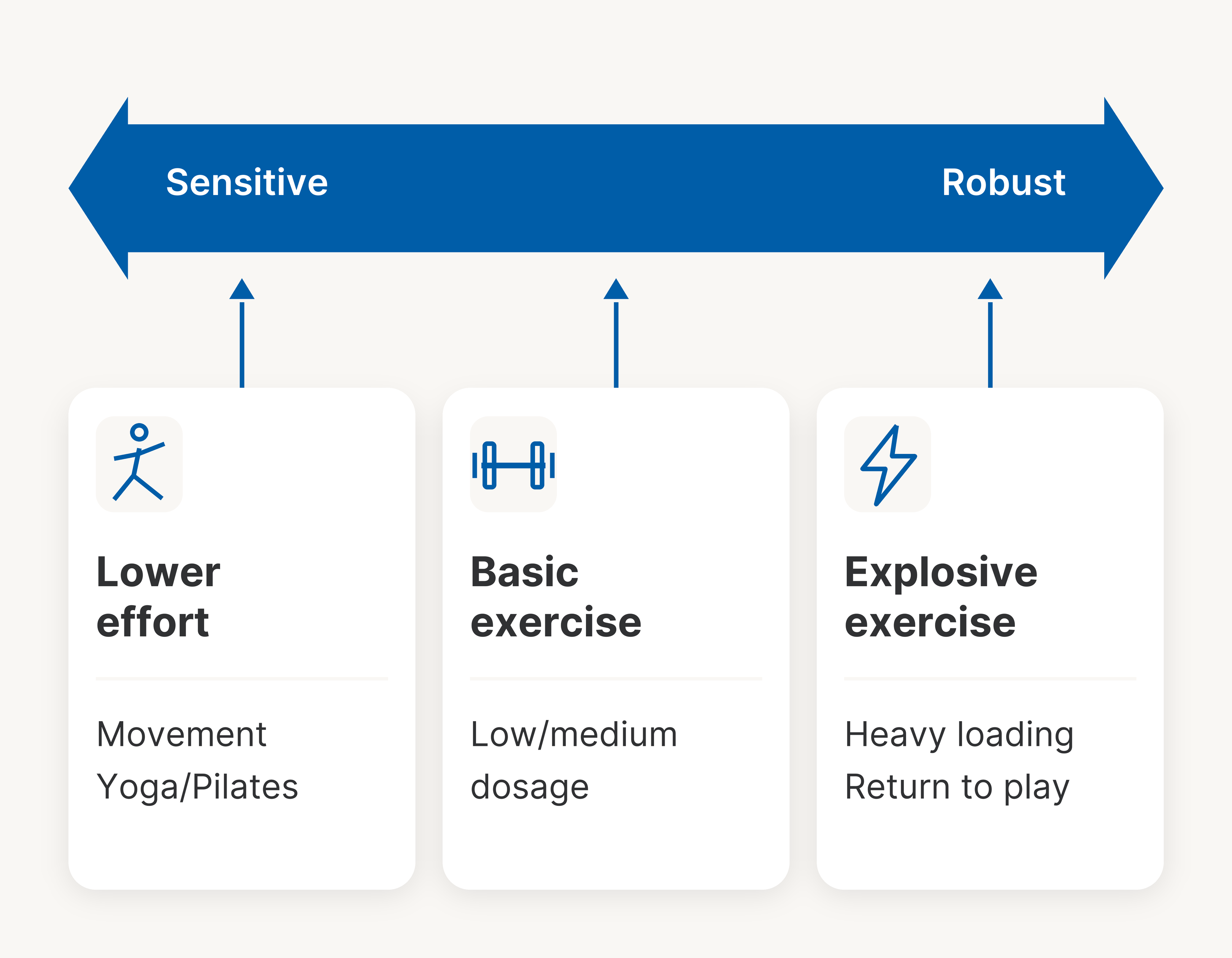
The simple ‘rule’ is as symptoms reduce so effort (RPE) and loading can increase. This can be done via the type of exercise, type can dictate the dosage, or simply managing the level of intensity or effort of the exercise. This should culminate in a simple, although often non-linear, progression towards the more robust end of the rehab spectrum that includes plyometrics and using larger loads.
As the point of this model is to work subjectively with patient symptoms in the beginning phases of rehab, exact parameters are hard to come by. We cannot expect a mechanical stimulus to be as precise as pharmacology in terms of generating consistent analgesia, a perspective backed up by the data. This means that we must normalise a little trial and error or more of a process-based perspective that can be adjusted to titrate the correct dosage for the patient.
There are three time points that must be considered in the process, and these would be during, post and 24hrs later. Sometimes an exercise can feel uncomfortable and even painful during `an exercise but feel great afterwards, the opposite of this can also be true. Pain can often behave in some weird ways. An exercise can feel great when doing it, but then flare up the next morning, tendons are notorious for doing this. Monitoring response over a longer time frame takes this knowledge into account.
A simple thought process for when symptoms are at their greatest is “less is more”, more load is likely to provoke more symptoms. This is unlikely to be helpful when pain is already at its greatest.
Any exercise could be used as a movement snack if the effort is adjusted to reflect the current state of the patient. When pain is at its greatest simple movements like a pelvic tilt, or 4-point rock back often provide simple, stable, and safe potions to explore movement.
The idea here, is not to check in with pain rep or even be overly pain focused. Instead helping patients appreciate that a smaller dose is required so therefore keeping the effort down is likely to fit that brief. A simple instruction of “relax and move” is often helpful to reduce the tension and apprehension associated with pain (14)Laird RA, Keating JL, Ussing K, Li P, Kent P. Does movement matter in people with back pain? Investigating 'atypical' lumbo-pelvic kinematics in people with and without back pain using wireless movement sensors. BMC Musculoskelet Disord. 2019;20(1):28.
doi: 10.1186/s12891-018-2387-x · PMID: 30658610.
As pain reduces so should effort then progress. This could be done by increasing the number of repetitions, adding in another set, adding load, or changing the exercise for another one that is more demanding, the amount of rest between sets could also be reduced if required.
If pain increases beyond what is acceptable at any time point during the process, then the reverse process would apply. There could be a reduction in the amount of effort through a reduction in reps, sets, added load or changing the exercise. This does require a process mindset from clinicians rather than a simple prescriptive process. Helping patients appreciate that this is often a “trial and error” process is key, but also that the potential harm, increases in pain, is not damaging to the tissue but a temporary dosage problem that reflects a change in sensitivity that is likely to settle quite quickly.
Exercise for pain is a pretty inexact science. It should be viewed much less like a prescription and much more like an iterative process that evolves over time. A process mindset allows for adjustment over time to create the best dosage for the patient and their stage of sensitivity (15)Hofmann SG, Hayes SC. The future of intervention science: process-based therapy. Clin Psychol Sci. 2019;7(1):37-50.
doi: 10.1177/2167702618772296 · PMID: 30713811. A “flare up” does not indicate a failure but instead an opportunity to revisit the dosage and find one that may be more suitable for the current level of irritability.
Troubleshooting
Anyone who has worked in clinical practice knows that the best laid plans can often go wrong. We know that responses to treatment can often be inconsistent and therefore flare ups of pain can occur frequently. This requires that ability to potentially adjust the treatment approach or parameters. As discussed in the previous section, the exercise dosage can be adjusted if the desired response does not occur, via the manipulation of type or dosage of the exercise.
Education around what a flare up might indicate is vital. A common conceptualisation of pain is that it reflects the current state of the tissue (16)Moseley GL, Butler DS. Fifteen years of explaining pain: the past, present, and future. J Pain. 2015;16(9):807-13.
doi: 10.1016/j.jpain.2015.05.005 · PMID: 26051220, so a “flare” can be construed as having created more damage to tissue and therefor making the problem worse. Helping people understand that loading a sensitive area can provoke symptoms without further damage occurring can be helpful strategy to increase their loading behaviours (17)Craske MG, Treanor M, Conway CC, Zbozinek T, Vervliet B. Maximizing exposure therapy: an inhibitory learning approach. Behav Res Ther. 2014;58:10-23.
doi: 10.1016/j.brat.2014.04.006 · PMID: 24864005
The data around pain during exercise is pretty clear (18)Smith BE, Hendrick P, Smith TO, Bateman M, Moffatt F, Rathleff MS, et al. Should exercises be painful in the management of chronic musculoskeletal pain? A systematic review and meta-analysis. Br J Sports Med. 2017;51(23):1679-1687.
doi: 10.1136/bjsports-2016-097383 · PMID: 28596288. This has been investigated for several body parts, conditions and time frames with some studies even suggesting that pain during exercise can be beneficial. Interpreting these studies at their simplest helps us understand that short term increases in pain, up to around a 5 on the VAS scale, do not seem to negatively affect long term outcomes.
A favourite analogy of mine around pain is that it is much like a bee sting. The pain from a bee sting is not caused by significant damage to the tissue, but instead via the injection of inflammatory chemicals into the local area. The primary active agent melittin activates nociceptors and triggers the release of histamine that creates an inflammatory response. A paper cut is another example where there can be very minor damage in comparison to the pain that is experienced and get another chemical irritant into that paper cut (like lemon juice) and all hell breaks loose.
The sign of a patient who can effectively self-manage, can be the ability to adjust their own dosage according to the symptoms they experience without any input form their health care professional. Often people do require some coaching and support in this regard, especially during the earlier stages when the responses can be more extreme and often inconsistent (19)Hutting N. From passive care to self-management support: a new era in manual and musculoskeletal physiotherapy. Musculoskelet Sci Pract. 2025;78:103370.
doi: 10.1016/j.msksp.2025.103370 · PMID: 40543106. Making the self-management process a specific focus can help to emphasise the importance of self-management and adherence to a movement and exercise-based program as part of the recovery process.
Conclusion
A “movement snack” based approach allows clinicians to use active movement whilst also minimising the risk of pain “flare up’s”. This can prove to be valuable in allowing people more control and agency over their painful problems and this can contribute to more effective self-management. It is important that clinicians remember this is not a simple, prescriptive event, but a process that requires input from the patient and likely adjustment to find a beneficial dose.
References
- Subialka JA, Smith K, Signorino JA, Young JL, Rhon DI, Rentmeester C. What do patients referred to physical therapy for a musculoskeletal condition expect? A qualitative assessment. Musculoskelet Sci Pract. 2022;59:102543.
doi: 10.1016/j.msksp.2022.102543 · PMID: 35334352 - Chen Y, Campbell P, Strauss VY, Foster NE, Jordan KP, Dunn KM. Trajectories and predictors of the long-term course of low back pain: cohort study with 5-year follow-up. Pain. 2018;159(2):252-260.
doi: 10.1097/j.pain.0000000000001097 · PMID: 29112007 - Cormack B, Stilwell P, Coninx S, Gibson J. The biopsychosocial model is lost in translation: from misrepresentation to an enactive modernization. Physiother Theory Pract. 2023;39(11):2273-2288.
doi: 10.1080/09593985.2022.2080130 · PMID: 35645164 - Foster NE, Thomas E, Bishop A, Dunn KM, Main CJ. Distinctiveness of psychological obstacles to recovery in low back pain patients in primary care. Pain. 2010;148(3):398-406.
doi: 10.1016/j.pain.2009.11.002 · PMID: 20022697 - Martinez-Calderon J, Zamora-Campos C, Navarro-Ledesma S, Luque-Suarez A. The role of self-efficacy on the prognosis of chronic musculoskeletal pain: a systematic review. J Pain. 2018;19(1):10-34.
doi: 10.1016/j.jpain.2017.08.008 · PMID: 28939015 - Jack K, McLean SM, Moffett JK, Gardiner E. Barriers to treatment adherence in physiotherapy outpatient clinics: a systematic review. Man Ther. 2010;15(3):220-8.
doi: 10.1016/j.math.2009.12.004 · PMID: 20163979 - Vaegter HB, Jones MD. Exercise-induced hypoalgesia after acute and regular exercise: experimental and clinical manifestations and possible mechanisms in individuals with and without pain. Pain Rep. 2020;5(5):e823.
doi: 10.1097/PR9.0000000000000823 · PMID: 33062901 - Vaegter HB, Petersen KK, Sjodsholm LV, Schou P, Andersen MB, Graven-Nielsen T. Impaired exercise-induced hypoalgesia in individuals reporting an increase in low back pain during acute exercise. Eur J Pain. 2021;25(5):1053-1063.
doi: 10.1002/ejp.1726 · PMID: 33400333 - Hayden JA, Ellis J, Ogilvie R, Malmivaara A, van Tulder MW. Exercise therapy for chronic low back pain. Cochrane Database Syst Rev. 2021;9(9):CD009790.
doi: 10.1002/14651858.CD009790.pub2 · PMID: 34580864 - Elwyn G, Buetow S, Hibbard J, Wensing M. Measuring quality through performance. Respecting the subjective: quality measurement from the patient's perspective. BMJ. 2007;335(7628):1021-2.
doi: 10.1136/bmj.39339.490301.AD · PMID: 18007003 - Hasenbring MI, Pincus T. Effective reassurance in primary care of low back pain: what messages from clinicians are most beneficial at early stages? Clin J Pain. 2015;31(2):133-6.
doi: 10.1097/AJP.0000000000000097 · PMID: 24662495 - Barakatt ET, Romano PS, Riddle DL, Beckett LA. The reliability of Maitland's irritability judgments in patients with low back pain. J Man Manip Ther. 2009;17(3):135-40.
doi: 10.1179/jmt.2009.17.3.135 · PMID: 20046619 - Almeida de Oliveira L, Gross AR, Carlesso L, Hanna S, Bakaa N, Silva D, et al. Graded activity for chronic low back pain. Cochrane Database Syst Rev. 2025;2(2):CD015507.
doi: 10.1002/14651858.CD015507 · PMID: 39936503 - Laird RA, Keating JL, Ussing K, Li P, Kent P. Does movement matter in people with back pain? Investigating 'atypical' lumbo-pelvic kinematics in people with and without back pain using wireless movement sensors. BMC Musculoskelet Disord. 2019;20(1):28.
doi: 10.1186/s12891-018-2387-x · PMID: 30658610 - Hofmann SG, Hayes SC. The future of intervention science: process-based therapy. Clin Psychol Sci. 2019;7(1):37-50.
doi: 10.1177/2167702618772296 · PMID: 30713811 - Moseley GL, Butler DS. Fifteen years of explaining pain: the past, present, and future. J Pain. 2015;16(9):807-13.
doi: 10.1016/j.jpain.2015.05.005 · PMID: 26051220 - Craske MG, Treanor M, Conway CC, Zbozinek T, Vervliet B. Maximizing exposure therapy: an inhibitory learning approach. Behav Res Ther. 2014;58:10-23.
doi: 10.1016/j.brat.2014.04.006 · PMID: 24864005 - Smith BE, Hendrick P, Smith TO, Bateman M, Moffatt F, Rathleff MS, et al. Should exercises be painful in the management of chronic musculoskeletal pain? A systematic review and meta-analysis. Br J Sports Med. 2017;51(23):1679-1687.
doi: 10.1136/bjsports-2016-097383 · PMID: 28596288 - Hutting N. From passive care to self-management support: a new era in manual and musculoskeletal physiotherapy. Musculoskelet Sci Pract. 2025;78:103370.
doi: 10.1016/j.msksp.2025.103370 · PMID: 40543106